Designing Tools for Creative Learning
2026 | 8 Months | Role: Program Manager | Design & Management for Creative Learning Lab
Children in grades 3, 4, and 5 attended creative classroom activities, yet faced challenges in expressing their ideas, especially in tasks involving writing and sequencing their thinking. Facilitators were working with broad goals such as creativity, speaking, and participation, but translating these into consistent classroom learning was a challenge.
In this work, I focused on designing simple tools and structures to support children's creative learning and help them move from imagination to expression through making.




Project Context
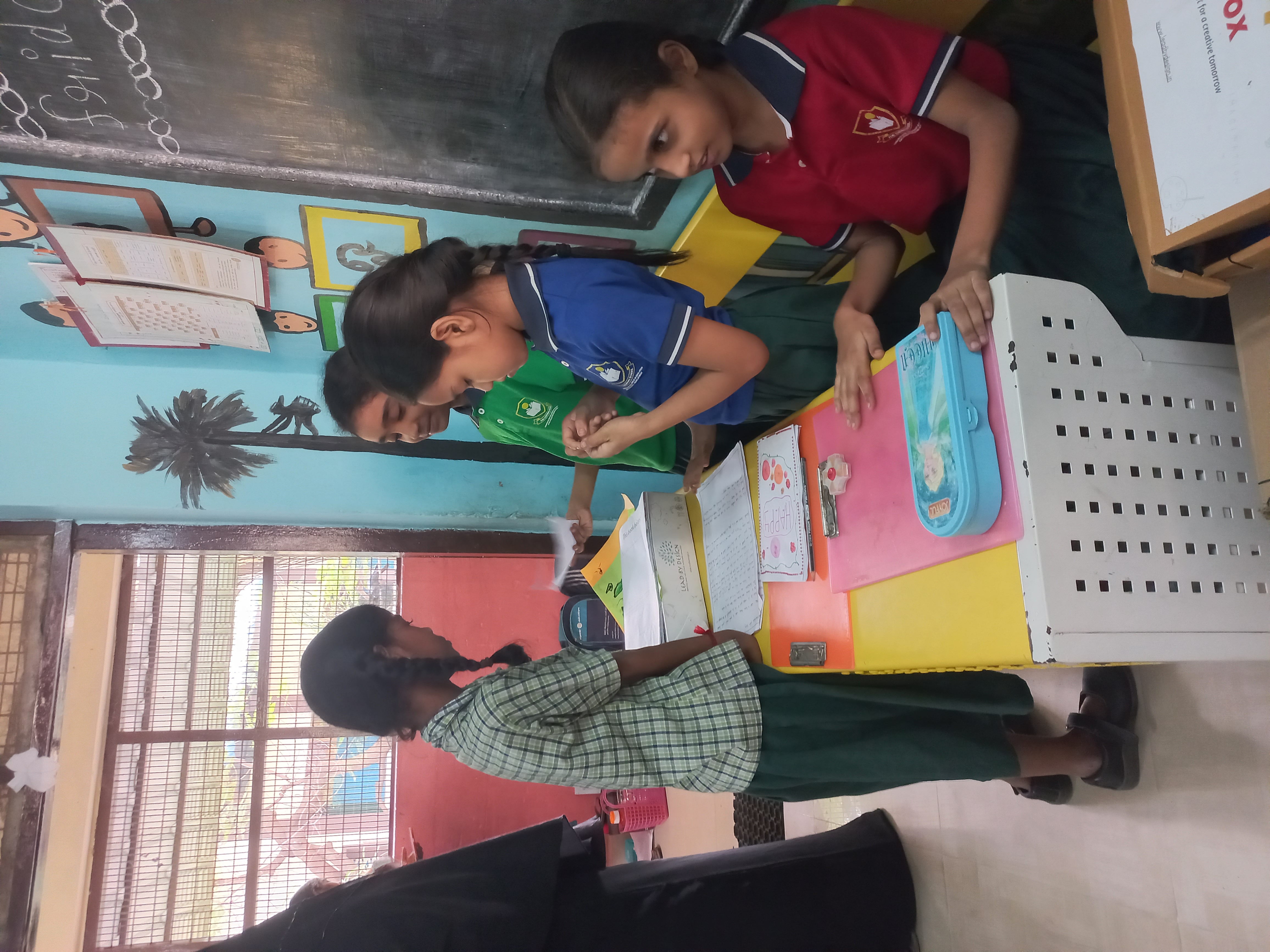
Audience: Creative Learning Labs (part of Lead by Design) works with Grade 3–5 students in government (state-run) schools of Chennai, India.
Sessions are run by facilitators (“Sustainable fellows”).
Focus: Labs focuses on developing creative thinking, problem solving, listening, speaking, collaboration, self-regulation, and focus in children and montior progress as per metrics it has established for the same.
Timeline: This program runs every academic year, from June to March, split into 3-terms. A 40-min session is held every week for grades 3, 4, and 5. Three showcases are held to encourage children to showcase their learnings .
Problem Statement & Constraints
As the sessions progressed, the children developed an interest in joining creative activities and sharing their ideas. However, we noticed a significant gap between how they expressed themselves verbally in their regional language and how they communicated those ideas in creative formats. Our main challenge was to move from exploratory stages and to offer guidance that supported their imagination without limiting it, and channel their imagination to help them develop creative and critical problem-solving skills.
01 Expression Gap
Children could verbally express their emerging ideas in regional language, but struggled to organize the thoughts into written or other creative formats in English.
02 Structuring Difficulty
Children found it hard to sequence thoughts or complete tasks without continuous guidance.
03 Diverse Learning Levels
Classrooms had varied abilities across listeninig, speaking, problem solving and focus, making it difficult to design activities that worked for everyone.
04 Facilitator Load
Facilitators had to manage multiple children at once, limiting the depth of individual support in a 40-minute weekly session.


Fieldwork (Primary research, Synthesis, and Testing), @Creative Learning Lab, Chennai
My responsibilities
Support children & facilitators in translating abstract ideas into structured narratives, problem frameworks, and tangible solutions across multiple stages of thinking.
-
Observed classroom sessions to understand what was working and what wasn’t
-
Spoke to facilitators to identify challenges in delivery and learning
-
Designed and tested worksheets with children, based on their responses
-
Improved materials and sessions through ongoing feedback and iteration
-
Supported facilitators with session flow, timing, and structure
-
Reviewed existing content and suggested practical changes
Design Intervention
The tools below (their content & visuals) work together to guide the session step by step, helping children bridge the gap between imagination, expression, and making.
01 For Grade 3 and 4 Children
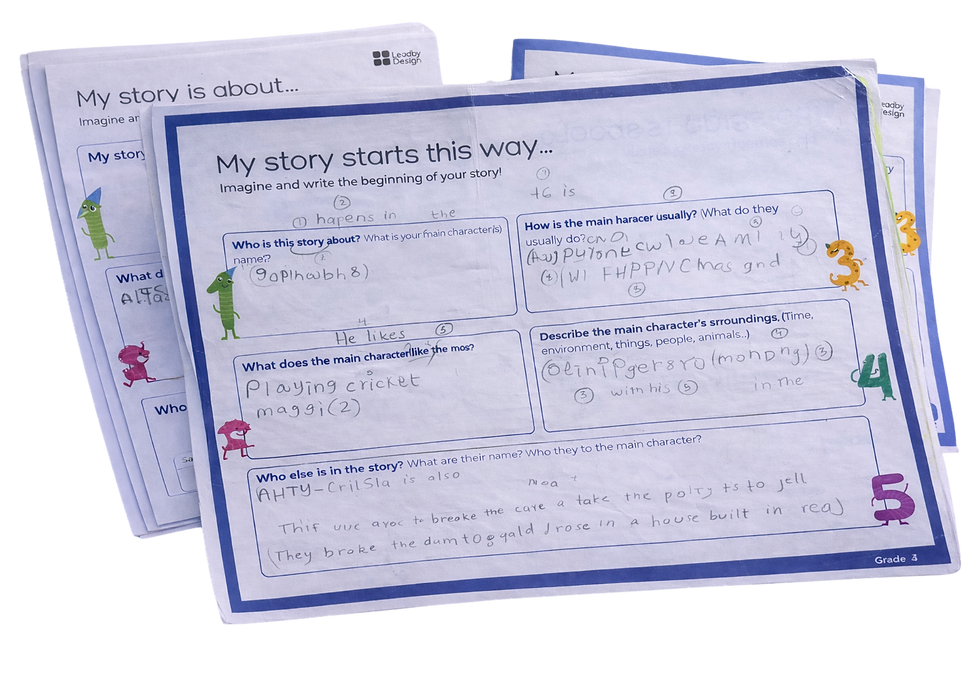
Story-building sheets
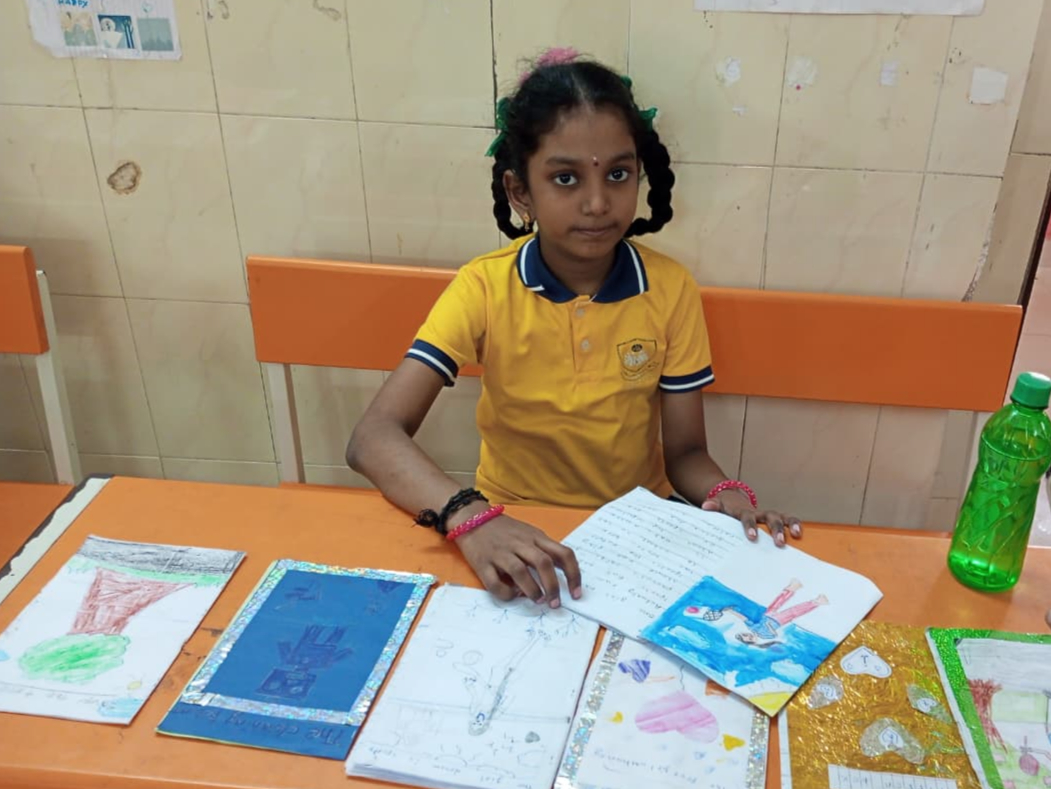
Worksheets were designed to help students translate their abstract regional-language stories into structured narratives in English.
-
With character arc, setting, sequence (beginning-middle-end)
-
helped children move from idea → full story and illustrations

02 For grade 5 children
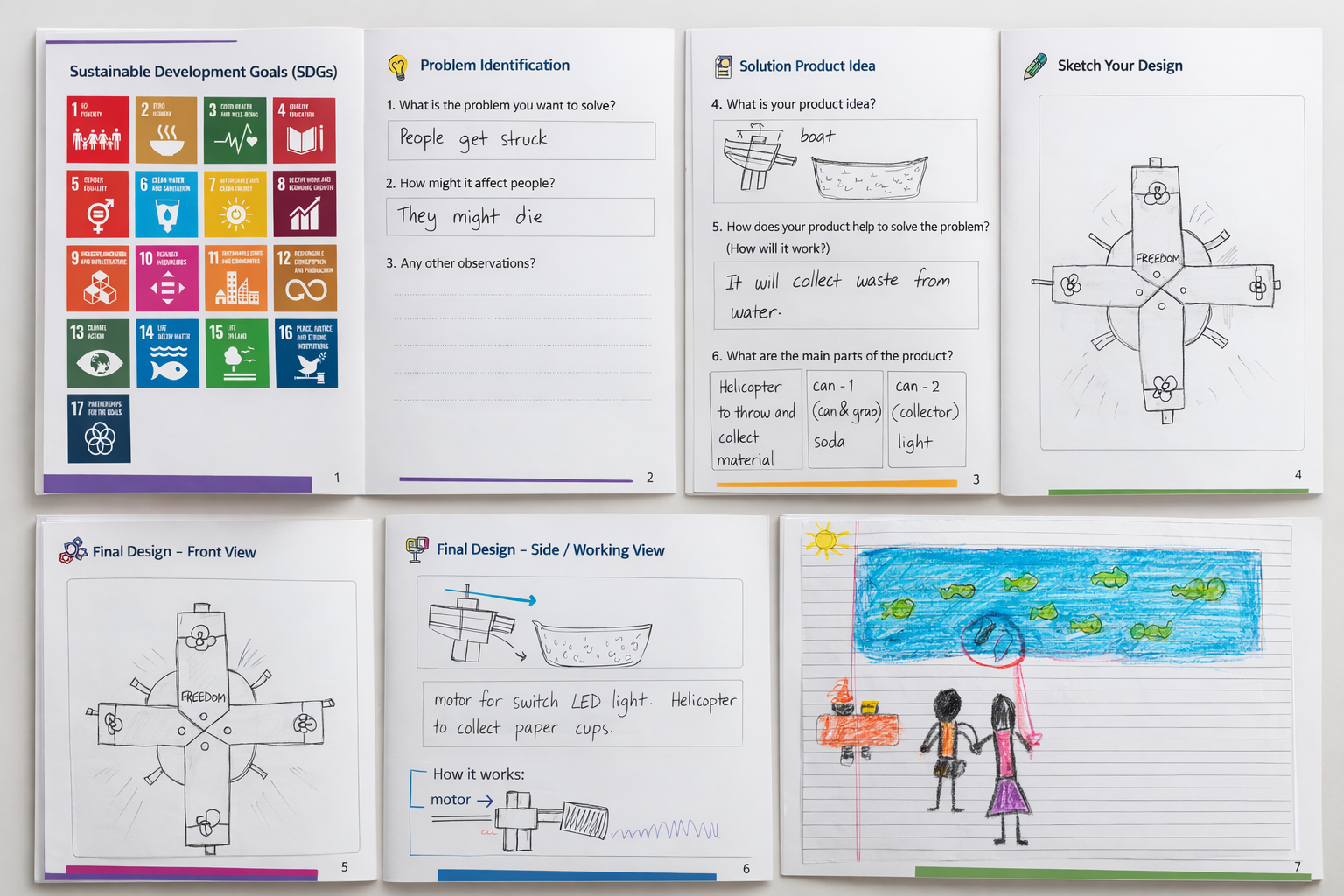
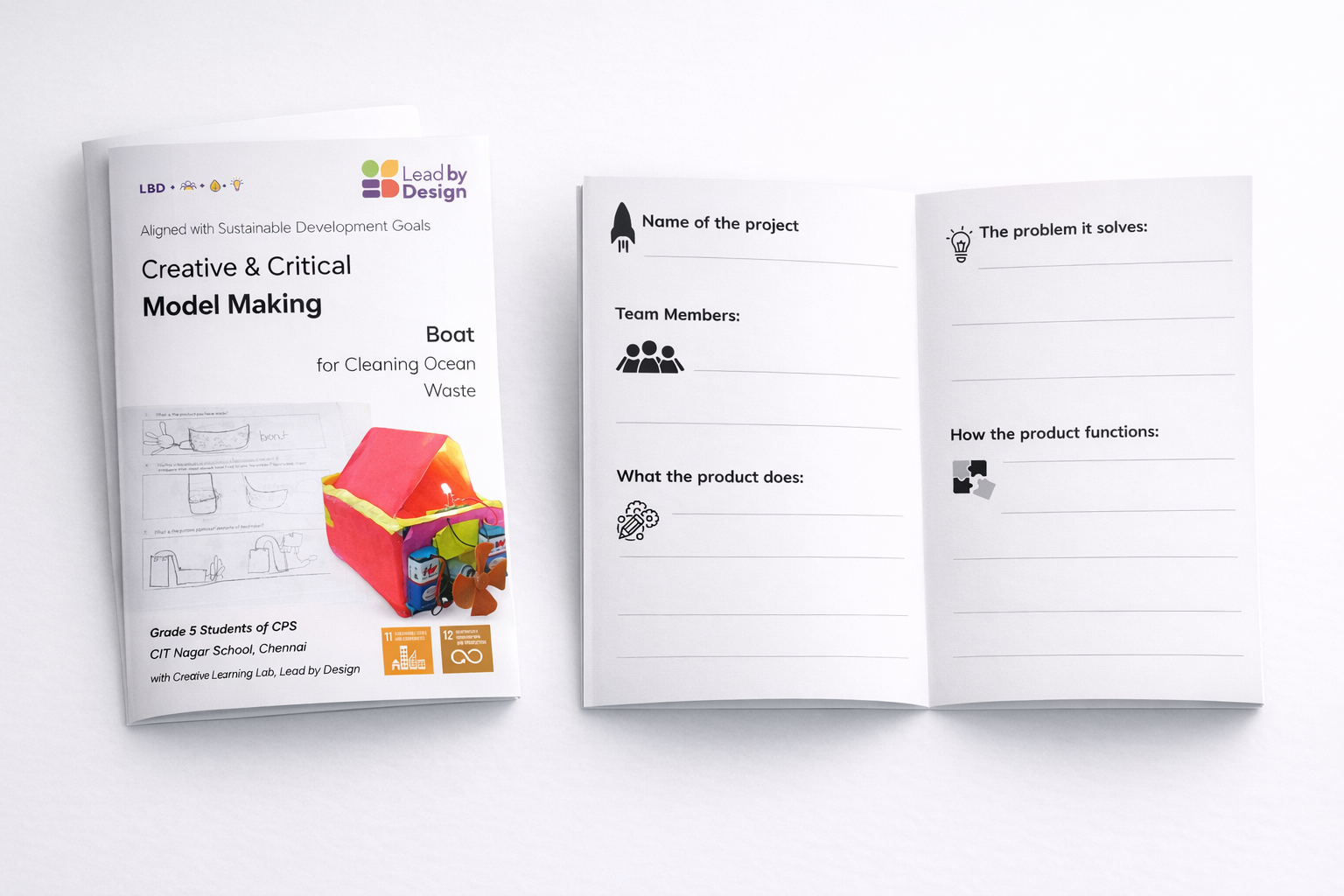
Creative problem-solving worksheets
These are step-by-step activity guidance based on children's work, which helped structure their thinking to make it buildable.
-
The tool has 3 levels, so children of all skill levels can use it.

03 For Grade 3, 4, and 5
SDG-based prompts (exploratory)
These are simple cards and prompts to convey complex, real-world understandings of sustainable development themes to children.
Key Design Decisions
01 Task Breakdown
To break activities into small, step-by-step parts for focus.
02 Visual Prompts
To start with drawing/making before writing in English.
03 Make Before Write
To start with drawing/making before writing in English.
04 Guided Prompts
To give guided prompts instead of open blank pages.
05 Learning over Perfection
To focus on getting organized ideas out first, over perfect outputs
My Design Process
01 Primary & Secondary Research
Understanding Context
Reviewed work from previous years to understand what worked and what didn’t.
Engaged with different stakeholders, children, fellows, the founder, and the school to identify key challenges.
Through classroom visits and field observations, I gathered insights on how fellows were working with children using existing metrics.
This helped shape my understanding of how the program could move from an initial exploratory phase (term 1) into something more structured and scalable.
02 Ideation & Designing
Ideating Prototypes
Synthesised insights into implementable ideas for the next terms, based on feedback from fellows, the founder, and my classroom observations.
We iterated through multiple concepts to arrive at approaches that were feasible for our context.
Tested prototypes during regular classroom visits to see how they worked with children before finalising them.
03 Testing, Feedback & Iteration
Refining Through Use
Gathered feedback from fellows who were using the tools directly with children.
We made changes based on what worked, what didn’t, and how children responded in real time.
This process was also aligned with weekly and monthly goals set with the founder and fellows, ensuring the tools remained usable within the existing program structure.
What Changed?
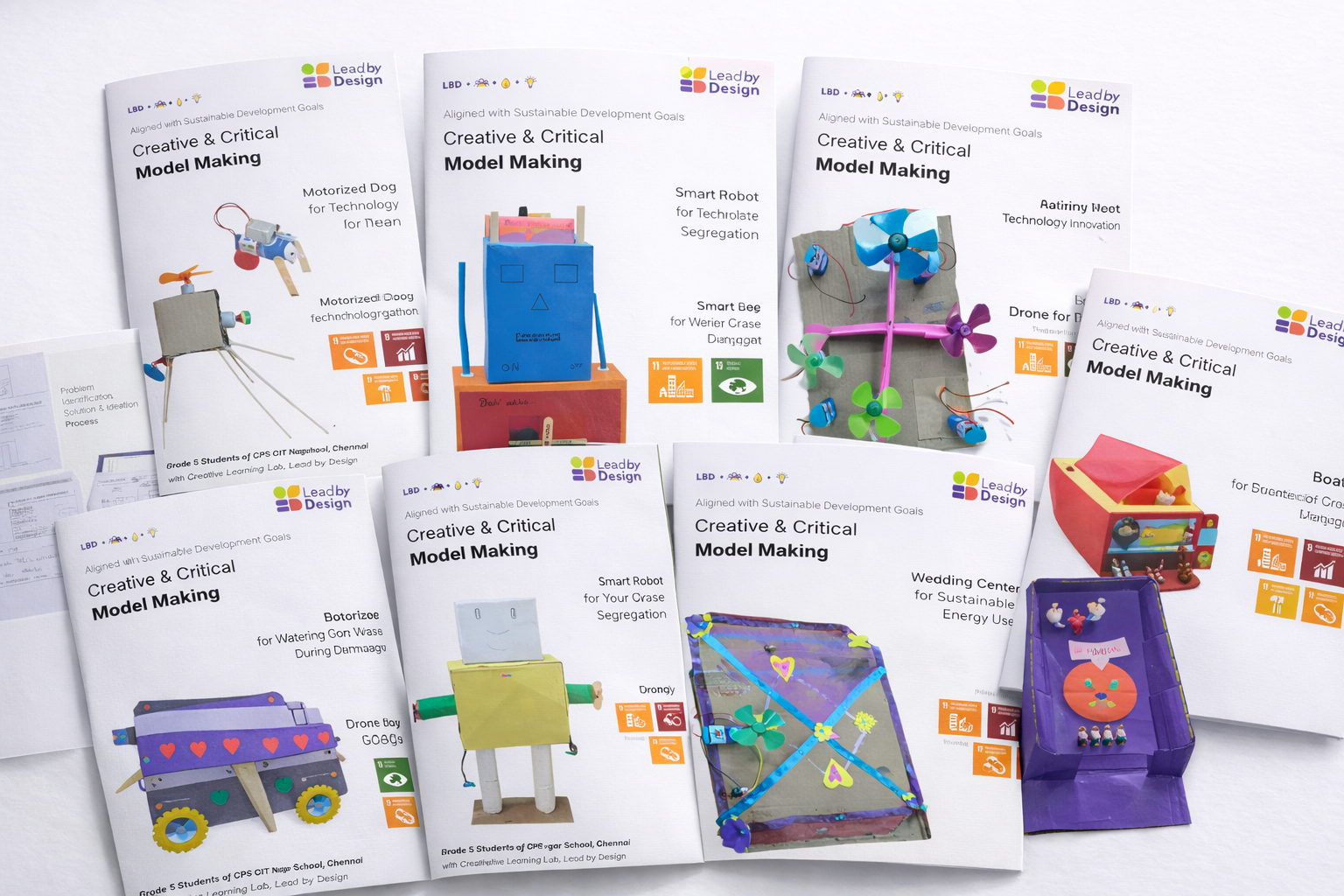
Children of 3, 4, and 5 were able to start tasks more easily, instead of getting stuck at the idea stage. More ideas turned into visible outputs, such as stories, drawings, and models.
Writing and structured thinking felt more approachable, even when language was a barrier.
Sessions became less scattered, and facilitators had clearer tools to guide sessions and support children more consistently. A Human-Centered Design (HCD) approach to supporting students’ creative and critical thinking is introduced as scalable units for creative learning labs, implementable in the coming years as needed.


Creative
&Critical
models
from
children!
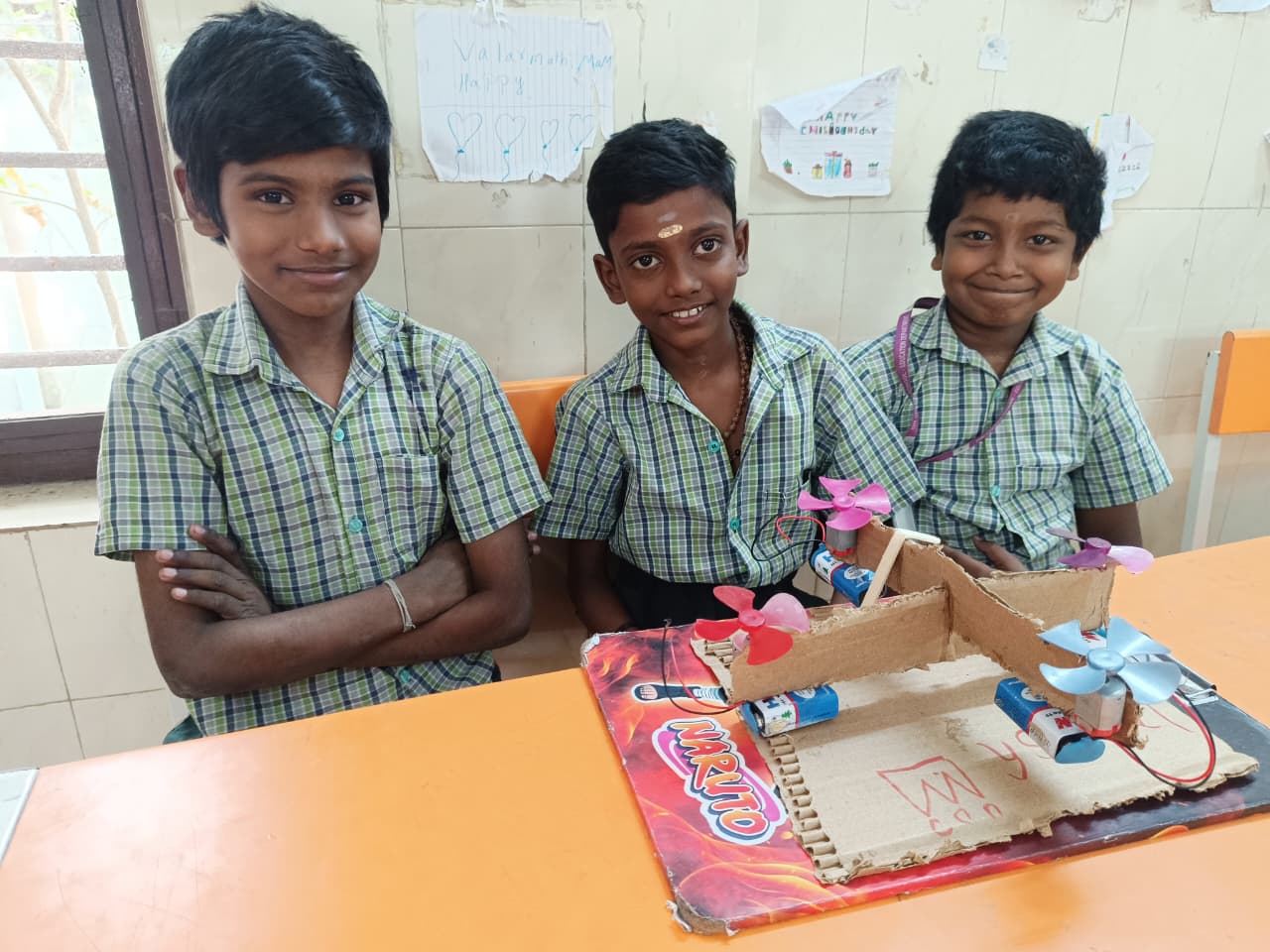
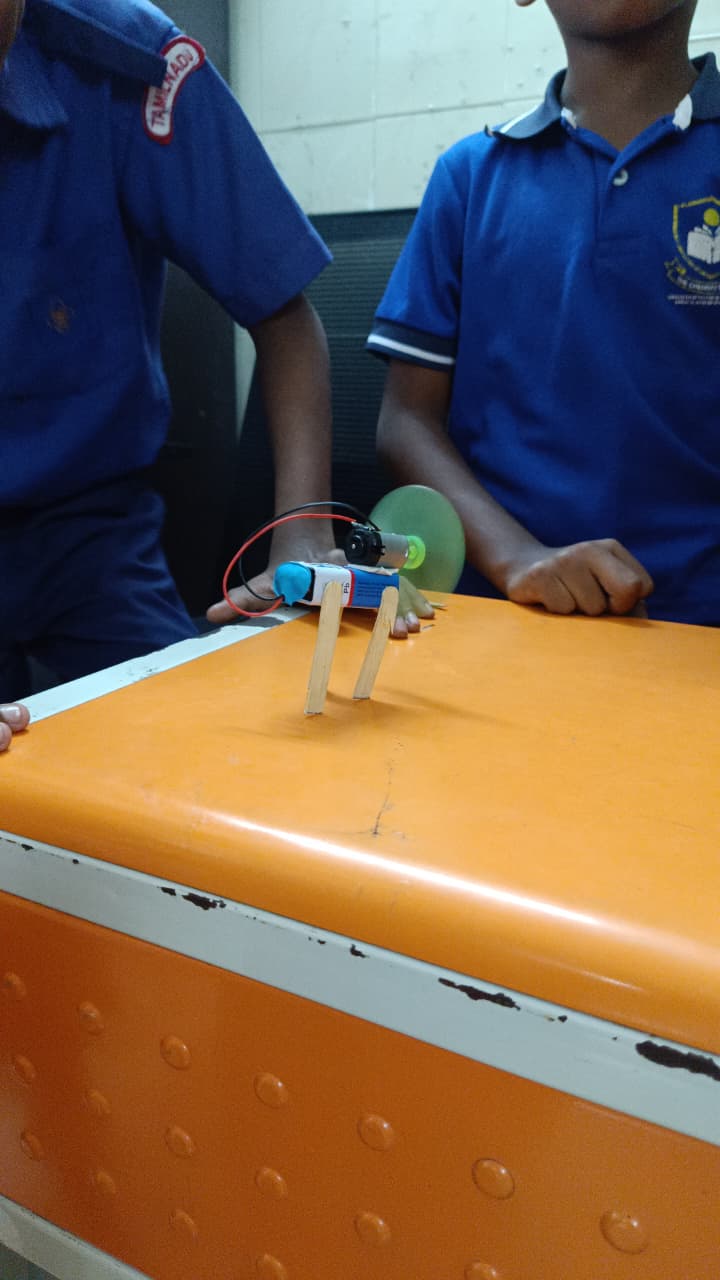
Children made these models with the help of the toolkit designed to turn their ideas tangible. Through storytelling and model making, they explored real-world challenges and developed creative, critical responses inspired by the Sustainable Development Goals.


